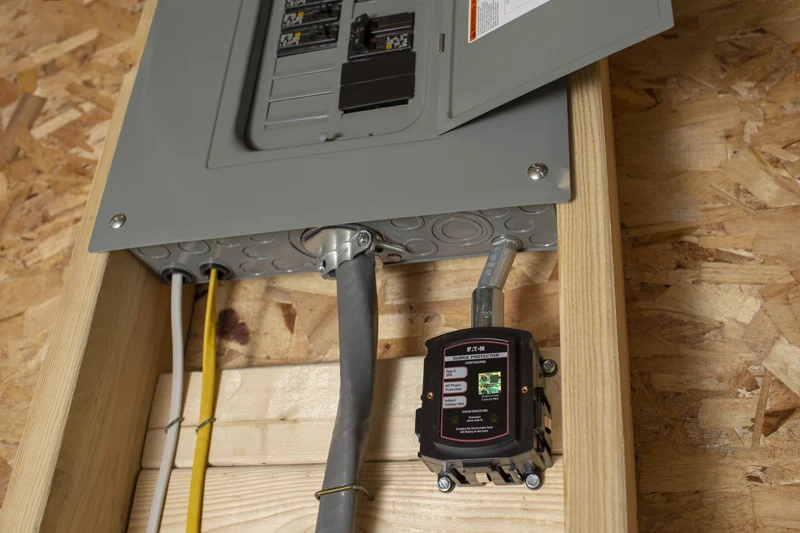



Protect Everything in Your Home.
Power surges can damage or destroy electronics, appliances, and HVAC systems in an instant — and they happen more often than most homeowners realize. Lightning strikes, utility switching, and even large appliances cycling on and off generate surges that wear down your equipment over time. A whole-home surge protector installed at your panel stops surges before they reach any circuit in your home.
Whole-Home Coverage
A panel-mounted surge protector defends every outlet, appliance, and circuit in your home simultaneously — unlike power strips, which only protect what's plugged into them.
Protects High-Value Equipment
Modern homes are filled with expensive electronics and smart appliances. TVs, computers, HVAC systems, refrigerators, and EV chargers are all vulnerable to surge damage — and often not covered by homeowners insurance.
One Installation, Lasting Protection
A whole-home surge protector requires no ongoing maintenance and doesn't need to be replaced after a surge the way a power strip does. Install it once and your home stays protected.

